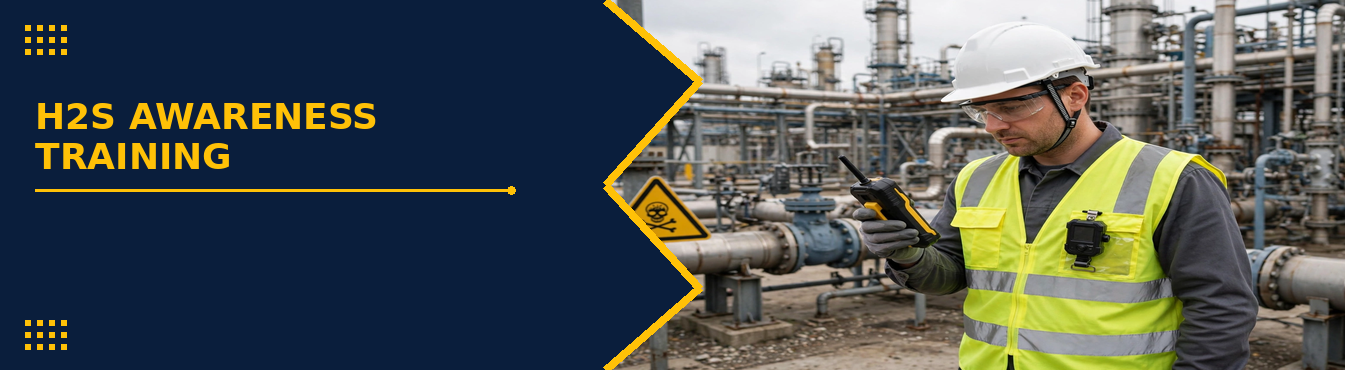
Hydrogen Sulphide (H2S)
Hydrogen sulphide (H2S) is a highly hazardous gas that can poison several systems in the body, particularly the nervous and respiratory systems. It may be present in oil and gas activities, well fluids, drilling muds, sewage and other locations where organic matter breaks down without oxygen. H2S may be encountered both offshore and onshore, including at wellheads, piping systems, pipelines, storage tanks, sewers, refineries, drilling locations and gas terminals. The course provides delegates with awareness of the properties, dangers and precautions associated with H2S, together with knowledge of respiratory protection and safe use of breathing apparatus.
TRAINING OBJECTIVES
- Provide delegates with an understanding and awareness of hydrogen sulphide (H2S).
- Explain the properties and dangers of H2S gas.
- Explain where H2S may be found and where leaks may occur.
- Explain the precautions required when dealing with H2S.
- Provide knowledge of workplace exposure limits for H2S.
- Explain the effects of H2S exposure on the human body.
- Develop working knowledge of respiratory protection.
- Explain how H2S can be detected using fixed and portable detection equipment.
- Provide knowledge of basic first aid following H2S exposure.
- Provide delegates with the skills and knowledge to use breathing apparatus in a safe and controlled manner.
LEARNING OUTCOMES
- Understand common locations where H2S may be present.
- Understand the main hazards and properties of H2S.
- Understand the workplace exposure limits presented in the course.
- Understand the effects of different H2S concentrations on the body.
- Understand how H2S affects the sense of smell, eyes, lungs and nervous system.
- Have working knowledge of respiratory protection, including escape sets, SCBA and airline-fed/cascade breathing apparatus.
- Understand how H2S can be detected using fixed gas detection systems, portable/personal gas monitors and gas detector tubes.
- Understand basic H2S first-aid and rescue considerations.
- Understand the importance of using SCBA when entering an area where H2S has been detected during rescue.
- Understand the basic CPR information presented in the course and the need for appropriate resuscitation equipment.
BENEFITS OF TRAINING
The training helps participants recognize the presence and dangers of H2S before entering or working in areas where exposure may occur. It improves awareness of H2S locations, exposure limits, detection methods, respiratory protection and the effects of exposure on the body. It also helps participants understand the importance of suitable breathing apparatus, safe rescue arrangements and basic first-aid actions following an H2S incident.
WHO CAN ATTEND THIS TRAINING?
Everyone working at the site must complete H₂S awareness training before entering the plant.
HOW WE DELIVER TRAINING
- Instructor-led PowerPoint presentation.
- Instructor and delegate introductions.
- Questions and discussion throughout the course.
- Practical knowledge and skills relating to breathing apparatus.
- Discussion of H2S detection equipment and usage guidelines.
- Review of H2S first-aid and rescue arrangements.
ASSESSMENT
The assessment of the learners is done through a multiple-choice questionnaire set to assess the learning approach and the understanding of what is taught to them.
Qualification
H2S AWARENESS TRAINING
Duration
One day and customised
Training Mode
Online / Classroom / In-company
Level
Language
English / Hindi
Prerequisites
None