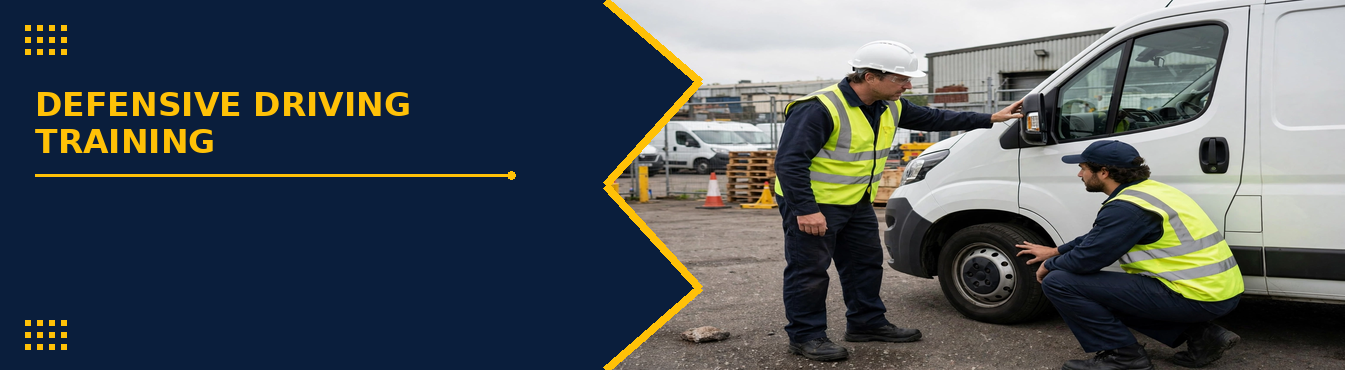
DEFENSIVE DRIVING TRAINING
Road safety is important for everyone who uses the road, including drivers, passengers, pedestrians and two-wheeler riders, as road accidents can cause serious injuries, loss of life, and damage to vehicles and property. Defensive driving is a safe driving approach that helps drivers identify possible hazards and respond to mistakes made by other road users by staying alert, following traffic rules, maintaining a safe speed and distance, checking their surroundings and being prepared for unexpected situations. The Defensive Driving Training (DDT) is designed to improve drivers’ knowledge, awareness and safe driving behaviour and covers important topics such as road safety, helmets and seat belts, traffic rules, right of way, road signs and markings, hazard perception, overtaking, blind spots, safe following distance, highway driving, night driving, driving in rain and hilly areas, vehicle safety and emergency response. The training also helps participants understand how over-speeding, aggressive driving, distractions, fatigue, poor vehicle condition and other unsafe driving practices can increase the risk of road accidents.
TRAINING OBJECTIVES
- Raise awareness of road safety hazards and safe driving practices.
- Develop defensive driving skills to compensate for the errors of other road users.
- Understand the importance of helmets, chin straps and seat belts.
- Understand traffic rules, right of way, road signs, road markings and traffic signals.
- Develop awareness of hazards such as blind spots, tailgating, over-speeding and unsafe overtaking.
- Understand safe driving practices for highways, company premises, hilly roads, night driving and monsoon conditions.
- Develop awareness of vehicle maintenance, self-vehicle checks and driver competency.
- Understand how to respond safely to emergencies such as tyre blowouts and road accidents.
- Promote safe behaviour and responsible attitudes while driving.
LEARNING OUTCOMES
- Understand the basic principles of road safety and defensive driving.
- Understand the importance of helmets, seat belts and vehicle safety equipment.
- Identify essential driving documents and understand the importance of following traffic rules.
- Understand right of way, including priority for vehicles on the right, vehicles on roundabouts and crossing pedestrians.
- Recognize common traffic signs, road markings, traffic signals and road furniture.
- Apply the Smith5Keys: aim high in steering, get the big picture, keep your eyes moving, leave yourself an out, and make sure they see you.
- Identify hazards involving autorickshaws, heavy vehicles, blind spots, pedestrians, animals and other road users.
- Use safe overtaking practices and the MSM approach, and maintain a safe following distance using the 3-second rule.
- Apply safe driving practices during night, rain, hydroplaning, hilly roads and sharp bends.
- Understand vehicle inspection, preventive maintenance and basic emergency response after a road accident or tyre blowout.
- Understand the importance of driver competency, alertness, speed control and avoiding distractions.
BENEFITS OF TRAINING
Defensive driving training helps drivers recognize road hazards, understand the behaviour of other road users and take suitable action before an incident occurs. The training promotes safer driving habits such as maintaining a safe distance, controlling speed, checking mirrors, using seat belts and helmets, following road signs and traffic rules, and staying alert. It also helps drivers deal more safely with difficult conditions such as rain, darkness, hilly roads and highway driving.
WHO CAN ATTEND THIS TRAINING?
- Drivers and vehicle operators.
- Employees who drive two-wheelers or four-wheelers for work.
- Company drivers and transport personnel.
- Employees who regularly travel by road for work.
- Supervisors, safety personnel and other persons responsible for road safety.
HOW WE DELIVER TRAINING
- PowerPoint presentations.
- One-to-one interaction and discussion.
- Practical discussion of road safety situations and defensive driving techniques.
- End-of-section quiz.
- Question and answer session.
ASSESSMENT
The assessment of learners can be carried out through a multiple-choice questionnaire to assess their understanding of the defensive driving topics covered during the training.
Qualification
DEFENSIVE DRIVING TRAINING
Duration
One day and customised
Training Mode
Online / Classroom / In-company
Level
Language
English / Hindi
Prerequisites
None